
4th Grader Accused of Submitting AI-Generated Art | Teacher Questions Integrity
Edited By
Sofia Zhang
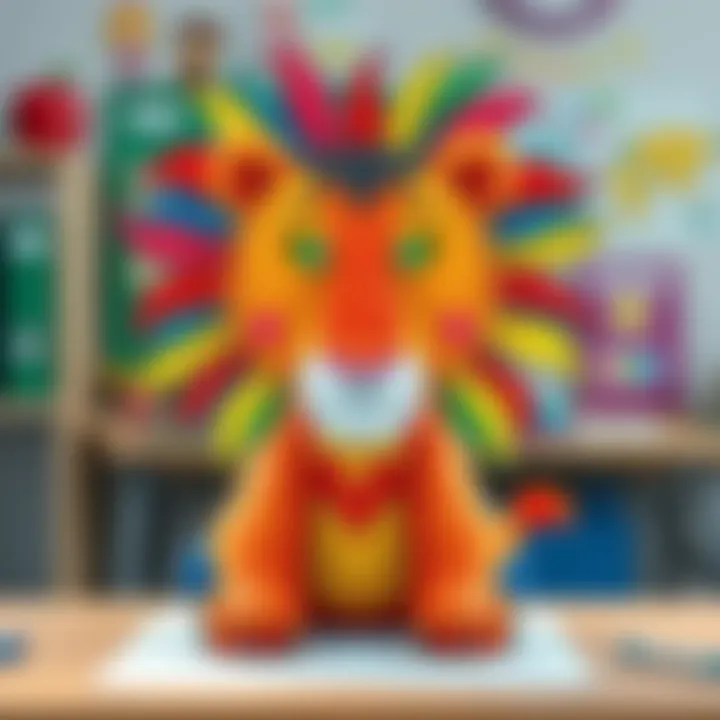
A fourth-grade art teacher raises eyebrows after suspecting a student of submitting AI-generated artwork as his own. The controversy has sparked a heated debate online about honesty in academic settings amidst rising AI technology.
In a recent post, the teacher mentioned noticing oddities in the drawing of a lion, claiming the line consistency and facial symmetry seemed too advanced for a 9-year-old kid. "I take academic integrity very seriously," he stated, hinting at a serious concern about a potential breach of trust in the classroom.
Growing Concerns Over Authenticity
This instance highlights broader questions about originality and the role of technology in education. Some commenters on forums echoed the teacher’s suspicions. One user pointed out, "That head looks like a geometrically perfect circle." Others suggested simpler fixes: "Why not tell them to draw on paper?" indicating a preference for traditional art methods.
The Role of Technology in Education
Interestingly, technology's evolving role raises the question of whether students and educators are prepared for such advancements. Teachers are now being urged to verify art submissions using tools that detect AI origins. One commentator mentioned, "You should also verify with Gemini - just upload and ask, 'is this AI?'"
Such tools exemplify the double-edged sword of AI integration, providing rapid solutions but also facilitating potential misconduct.
Cultural Sentiment Towards AI in Classrooms
Reactions to the teacher's concerns varied. Some commenters mockingly suggested the idea of academic integrity in a fourth grader's work. A comment read, "Dude it’s a 4th grade drawing, ‘I take academic integrity very seriously’ gtf outta here lmfao."
In contrast, others took a more serious stance on ongoing education ethics: "Indeed, we should just let kids get into the habit of cheating while they’re still young."
Key Insights
△ Symmetry of the drawing sparked suspicions about authenticity.
▽ Teachers are exploring tools to verify AI-generated submissions.
※ "Why not tell them to draw on paper?" - Reflective of educational discourse.
As AI technology grows, educators face new challenges in maintaining authenticity and integrity in student work. The implications of these debates could shape future classroom policies and teaching philosophies.
What's Next for Students and Technology?
There's a strong chance that educators will adapt their teaching methods in response to the rising concerns about academic integrity and AI-generated content. Experts estimate that within the next few years, more schools will implement verification tools and training for teachers to handle AI submissions. As AI technology becomes more advanced and accessible, classrooms may shift towards an emphasis on artistic process over final product, encouraging young artists to explore their creativity while learning ethical guidelines on technology use. This proactive approach could foster a culture of authenticity in the learning environment while also preparing students for a tech-savvy future.
A Lesson from the Invention of Photography
In a similar vein, consider the invention of photography in the 19th century, which initially faced skepticism from artists who felt it diluted the value of traditional painting. Many viewed photography as a threat to artistic integrity, fearing that it would lead to a loss of skill and originality. Yet, over time, artists adapted, integrating photography into their creative process. This evolution enhanced rather than undermined the art community, just as today's educators may need to view AI not merely as a challenge but as a tool that, if used wisely, could enrich the educational landscape and redefine how creativity is expressed.