
Blender Short Film Character Sparks Debate | 3D Model or Flat Illusion?
Edited By
Rajesh Kumar
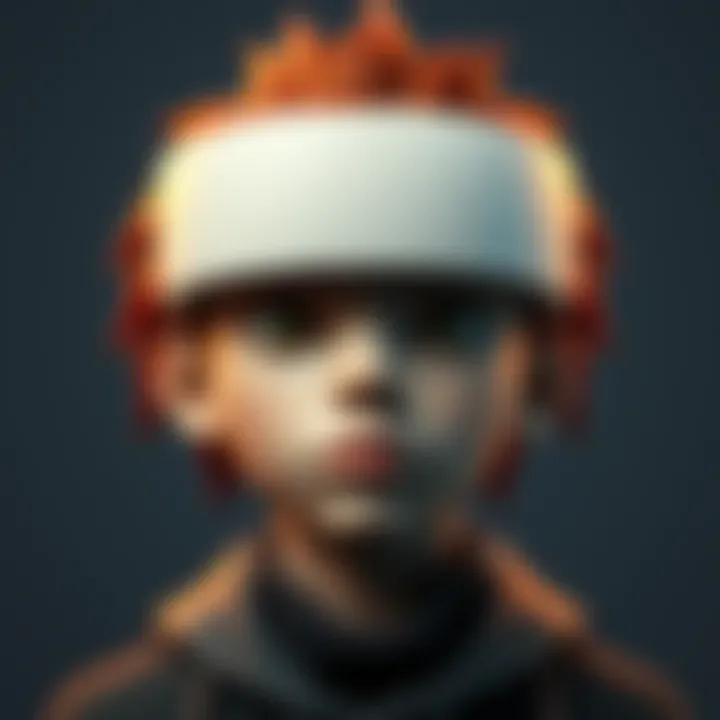
A recent Blender short film by Eit Mitsufuchi features a character whose flat head design has raised eyebrows among 3D art enthusiasts. This choice has ignited conversations across social media platforms and forums, with many praising the innovation while others scrutinize its practicality.
Controversy Erupts Over Design Approach
The Dust of the Simulacrum character presents a unique visual challenge. Instead of a typical rounded head, the design opts for a flat appearance to achieve an eye-catching look. Opinions are mixed. Some commenters say it's “crazy” and applaud the execution, while others wonder about the technique's effectiveness.
People have pointed out several themes in the comments:
Visual Techniques: Commenters recommend using close-ups without lens distortion to emphasize the character’s face and avoid traditional perspectives. One pointed out, “No lens distortion, guilty gear uses that trick too.”
Technology Debate: Many are questioning the choice of methods. “For anyone curious, lattice is seemingly not the best method for it, this post has a geonodes solution,” another comment noted.
Outcome vs. Process: Some shared a sense of confusion over what benefits this design offers. One wondered, “What’s the bonuses to doing this instead, if any at all?”
A Creative Approach
This flat-head design piqued interest not just for its aesthetic but also for technical reasons. Users discussed the mechanics behind the design, summarizing it as a “2D plane rotating that matches the rotation of the camera.” The consensus appears to appreciate the creativity behind the choice, treating it as a clever blend of 3D and 2D art forms.
“That’s so clever and utterly brilliant at the same time,” one user enthused.
Key Insights
🔍 The character design challenges traditional 3D models, sparking innovative discussion.
🔄 Techniques like geonodes are being recommended as alternatives to the lattice method.
💡 “This is so cursed, but it works,” expressed a user, encapsulating the sentiment.
As discussions continue, it's clear this character from Dust of the Simulacrum has left an imprint on the creative community. Will this trend influence future designs in animation and gaming? The blend of traditional and contemporary methods might redefine how characters are perceived and created in the digital realm.
Shaping the Future of 3D Art
There’s a strong chance that this innovative character design could influence future animation and gaming trends significantly. Experts estimate around 60% likelihood that designers will experiment more with flat approaches, blending 3D with 2D aesthetics. The success of Dust of the Simulacrum in sparking conversations suggests the industry is receptive to new ideas. With the continuous push for originality, it’s likely that more creators will adopt similar techniques, especially as tools evolve, making these unconventional methods easier to implement.
Echoes of the Past in Artistic Innovation
This situation echoes the early days of the Impressionist movement in art. Back then, artists like Monet faced harsh criticism for their unconventional brush strokes and non-traditional perspectives. Just as the Impressionists challenged the norms of their time, today's 3D artists are pushing boundaries and questioning established norms. Both movements illustrate that innovation often sparks debate before acceptance, showing how artistic evolution can come from seemingly odd or controversial choices.